
Standing water removal
Visible pooling needs source control, careful extraction and a check of where the water has spread.
Explore water removalStanding water after a burst pipe, appliance leak or storm? Call (972) 483-9718 to discuss water extraction, affected flooring and the next steps for your DeSoto property.
Share the water source, affected rooms and property address.
From standing water to a drying plan
Safety first: Stay out of standing water near outlets, appliances or electrical panels. Keep people away from suspected contaminated water. For immediate danger, contact emergency services.
A burst pipe or appliance leak may leave obvious pooling in one room while water moves under flooring, along baseboards or into adjoining spaces. Removing that visible water is important, but it does not establish that the building is dry.
Call with a description of the affected rooms, whether the source has stopped and any hazards you noticed. This helps shape the next conversation about assessment, extraction and the drying work that may follow.
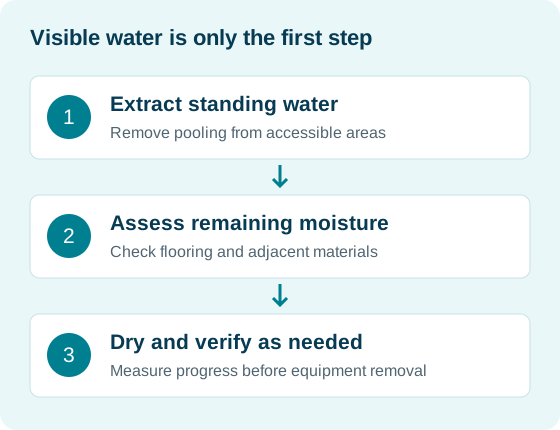
Water extraction is the removal of standing water from a property using suitable pumping or vacuum equipment. A moisture assessment then checks materials that may remain damp. Structural drying, where needed, uses airflow and dehumidification with measurements to track progress.
Explore the situation that most closely matches your property. The source and the materials involved influence the assessment.
Visible pooling needs source control, careful extraction and a check of where the water has spread.
Explore water removalAfter a supply line fails, water can reach flooring, cabinets and walls. Cleanup and pipe repair are separate tasks.
Explore burst pipe cleanupCarpet padding, flooring edges and subfloors may stay wet even when surface water is removed.
Explore floor extractionWashing machines, dishwashers, water heaters and refrigerator lines can leak into adjoining rooms.
Explore appliance leaksOutdoor water requires additional caution. Assess the entry point, affected materials and possible contamination.
Explore storm cleanupAirflow, dehumidification and moisture checks address damp materials after visible water is extracted.
Explore structural dryingThe exact work depends on an inspection. A clear scope should explain what will happen, what it will cost and how remaining moisture will be checked.
Identify the address, source, affected rooms and immediate hazards. Confirm availability and any assessment charges.
Evaluate accessible water and affected materials. Ask whether adjacent rooms or hidden spaces need moisture checks.
Appropriate equipment removes accessible standing water. Material removal or specialized cleaning may be separate parts of the scope.
Drying equipment may be needed after extraction. Measurements, monitoring and completion criteria should guide the next steps.
Carpet: Padding can hold water after the surface feels less wet. Contamination and the condition of underlying materials affect whether drying in place is appropriate.
Tile: A hard surface can hide moisture at edges, beneath trim or in adjacent walls. An apparently clean floor may still need surrounding areas checked.
Hardwood: Cupping, movement or discoloration calls for assessment. Extraction alone cannot guarantee that a floor will recover without further work.
An extraction estimate is most useful when the work is broken into understandable parts. Ask about assessment charges, water removal, drying equipment, monitoring visits, disposal and any separate repairs. Equipment time and access can affect the final scope.
Avoid comparing a water-removal quote with a full restoration quote as though they cover the same work. Request a written explanation of exclusions, changes and completion criteria. Insurance coverage is a separate conversation with your insurer.
Describe what you can see from a safe position. You do not need to enter an unsafe room to provide details.
This website focuses on water extraction requests for DeSoto properties in ZIP 75115. Give the exact street address when calling so coverage and current availability can be discussed. North, south, east, west and central DeSoto are broad orientation labels, not separate office locations.
Use the guides to understand the difference between extraction, drying and repairs. Keep a record of the assessment and ask who will perform each part of the proposed work.
For water extraction questions, call (972) 483-9718 or email seomik9@gmail.com. Telephone is the primary contact for an active water issue; email should not be treated as an emergency channel.
A practical sequence for staying safe, describing the damage and arranging an assessment.
Explore the first stepsUnderstand the difference between removing pooled water and drying the materials it touched.
Explore extraction and dryingLearn how to compare scope, equipment charges, monitoring and repair costs.
Explore cost considerationsNo. Extraction removes accessible pooled water. Drying addresses moisture still held in flooring, walls and other materials. A moisture assessment helps determine whether both are needed.
Provide the DeSoto property address, the water source if known, when you noticed it, which rooms are affected and whether water is still entering. Mention electrical hazards or suspected contamination.
No. Material condition, contamination, time wet and the extent of damage influence that decision. An inspection is needed before anyone can responsibly recommend drying in place or removal.
Source repair and water cleanup are different tasks. Ask whether plumbing repairs are included or need a separate professional before agreeing to a scope.
The affected area, water source, access, materials and equipment needs affect the estimate. Ask for a written scope that separates extraction, drying, monitoring and repairs.
Coverage depends on your policy and the circumstances of the loss. Keep documentation and discuss coverage directly with your insurer; do not assume every water loss is covered.
A fan cannot confirm whether moisture remains beneath flooring or inside a wall. Avoid using electrical equipment near wet areas and request an assessment when building materials are affected.
Call (972) 483-9718 with the exact DeSoto address. Confirm current availability, the anticipated arrival window and any visit charges during the conversation.
Call with the source, affected rooms and address to discuss the next steps for extraction and assessment.